

Cheap Paint vs Expensive Paint: Is Paying Less Really Worth It?
Posted by Sarah, Celtic Sustainables on 22nd Oct 2026
With the cost of living squeezing household budgets, it’s no surprise that we’re all looking for cheaper ways to get DIY jobs done. Paint is no exception. When one tin costs considerably less than another, it’s tempting to reach for the cheaper option and get on with the job.
But is cheap paint really cheaper in the long run? And is investing in a quality eco paint worth it?
At Celtic Sustainables, we’re not here to tell you to blow your budget on the most expensive paint. We want to help you make an informed choice, because the right paint is more than just a colour on your wall. It’s the final protective layer of your building.
-
Coverage: How Much Paint Do You Actually Need?
A cheaper tin might look like a bargain, but the price per litre doesn’t tell you how much wall it will cover.
Paint coverage varies by product, surface condition, colour and application method. Some paints cover more area per litre than others, while certain colour changes or porous surfaces may require additional coats.
Before buying, compare the manufacturer's stated coverage per litre and the recommended number of coats. Calculate how much paint your project actually needs rather than comparing tin prices alone.
Our tip: A slightly more expensive paint that covers more area or in fewer coats could work out better value overall. Always check the coverage figures before you buy. Ideally, buy a tester pot and try the paint on the wall that you intend to paint to see how much of the original colour comes through.
-
Durability: Will It Stand the Test of Time?
Paint needs to do more than look good on the day it goes on. Depending on where it's used, it may need to withstand everyday scuffs, regular cleaning, moisture or harsh weather.
A suitable, well-formulated coating can help protect the surface beneath it. Choosing the wrong paint for the building, however, can cause problems regardless of its price.
This is particularly important for exterior walls and walls that require a "breathable" surface finish. British weather puts coatings through their paces, with driving rain, frost and repeated wetting and drying. Choosing a paint suited to the substrate and exposure conditions can make a real difference to how well the finish performs over time.
Our tip: Look beyond the initial price. Check the product's expected performance, suitability for your surface and maintenance requirements.
-
Application: Is It Easier to Get a Good Finish?
Nobody wants to spend a weekend painting, only to be disappointed with the result.
Paint consistency, flow, opacity and drying time all affect how a product feels to apply. Some paints may be more prone to splashing, dripping or leaving an uneven finish, while others are formulated to make application easier.
Of course, technique, tools and surface preparation matter too. A premium paint won't compensate for poor preparation, and an inexpensive paint won't necessarily give a poor finish.
Our tip: Read the application instructions and choose a product suited to your experience, tools and project. If you're unsure, ask us before ordering.
-
VOCs and Indoor Air Quality: What's in Your Paint?
Volatile organic compounds (VOCs) are chemicals that can evaporate into the air from certain products, including some paints. Levels vary considerably between formulations, so it's worth checking the product information rather than assuming all conventional paints are the same.
If you're decorating a bedroom, nursery or living space, you may prefer a paint with very low VOC emissions and little odour. Many eco-conscious paint ranges are developed with these considerations in mind.
Our tip: Look at the manufacturer's technical information and VOC figures. A low-VOC or very-low-VOC paint can be a good choice for indoor projects. You will need to look further than the "low VOC" logo on the tin and always follow the product's application and ventilation guidance.
-
Breathability: Particularly Important for Traditional Buildings
This is where choosing the right paint becomes especially important.
If you're decorating lime plaster, stone, brick or another suitable traditional masonry surface, you should consider how moisture moves through the building. A vapour-permeable paint allows water vapour to pass through the coating, helping the wall manage moisture.
Using an unsuitable coating on a traditional wall can restrict drying and contribute to moisture-related problems. The right paint won't solve every damp issue, but choosing a compatible, breathable finish can be an important part of looking after the building.
Limewashing is one traditional option, although it can require more preparation, time and repeat applications than some modern coatings. If you're considering limewash, factor in the work involved as well as the material cost.
Our tip: Don't spend time choosing the right lime plaster or repairing traditional masonry, only to overlook the final coating. Treat paint as a building material, not just decoration.
Which Paint Should You Choose?
The best paint depends on what you're painting. Here's a quick guide to the ranges we supply at Celtic Sustainables.
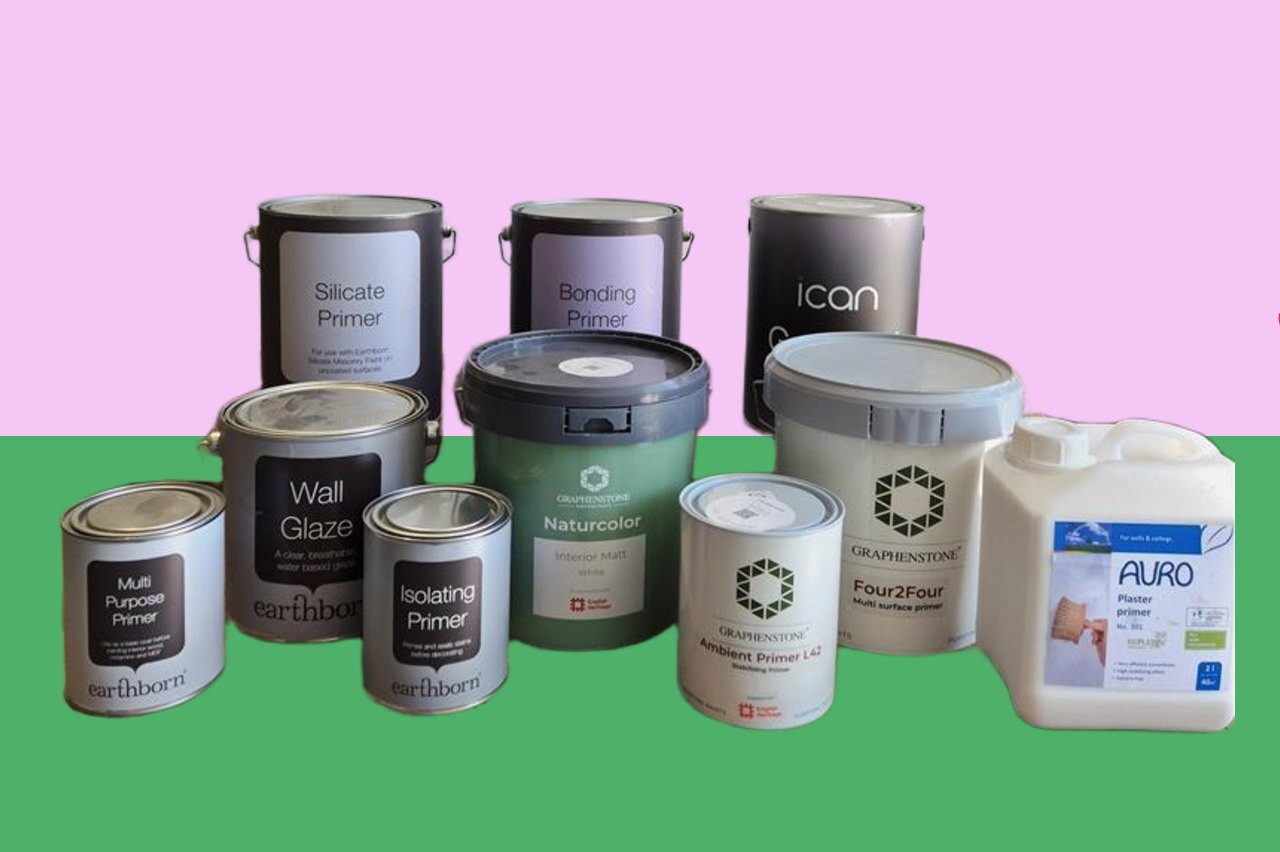
- Lime plaster, stone and suitable traditional masonry: Consider breathable, vapour-permeable options from AURO, KEIM, Beeck, Earthborn and Graphenstone. Always check the specific product is suitable for your substrate.
- Gypsum plaster, previously painted walls and cement-based surfaces: Eico, Earthborn Lifestyle and suitable Eco Pro Matt Emulsion products may be options, alongside compatible products from the ranges above. Check the manufacturer's guidance for the exact surface and preparation required.
- Interior woodwork: Look at suitable eggshell or satin finishes, such as Eico or Earthborn Eggshell, depending on the finish and durability you need.
- Exterior woodwork: Choose a coating specifically designed for exterior timber. Eico offers exterior wood paint within its range; check the individual product specifications before choosing. Otherwise, Osmo and Treatex oils are a good choice for exterior timber.
If you're unsure, contact us with details of your surface, its condition and whether you're painting indoors or outside. We'll help you narrow down the options.
So, Is Expensive Paint Worth the Extra Cost?
The real value lies in choosing a product that performs well, suits your building, meets your priorities and gives you the finish you need. Coverage, durability, application, VOC content and breathability can all be relevant, depending on the project.
A cheaper paint might be perfectly suitable for one job, while another surface may need a more specialised coating. The important thing is to compare like for like and consider the whole job, not just the price on the tin.
At Celtic Sustainables, we believe better choices start with better information. We'd rather help you choose the right paint first time than see you spend money on a product that isn't suitable for your project.
Need help choosing the right paint?
Explore our range of sustainable paints and finishes, or get in touch with the Celtic Sustainables team. We're happy to help you find the right product for your building, your budget and your plans.
