

Working with Lime in Summer: How to Protect Your Project During Hot Weather
Posted by Sarah, Celtic Sustainables on 23rd Jul 2026
If you've been following the weather this year, you'll know that 2026 has already brought several heatwaves, with long periods of hot, dry weather across the UK. While sunshine is great for getting building projects underway, it can quickly become one of lime's biggest enemies.
Here at Celtic Sustainables, we've had more phone calls than ever asking the same question:
"Is it too hot to work with lime?"
The short answer? Sometimes, yes.
Lime is a traditional, breathable building material that cures slowly by retaining moisture. If it dries too quickly, the chemical process is interrupted, which can lead to cracking, dusting, poor adhesion, shrinkage, or even complete failure of the application.
Whether you're applying lime mortar, lime plaster, lime render or limewash, careful planning during hot weather will reward you with a stronger, longer-lasting finish.
Why Hot Weather Causes Problems
Unlike cement, lime doesn't like to be rushed.
Fresh lime needs time and moisture to cure properly. During prolonged periods above 30°C, especially when combined with strong sunshine, drying winds and low humidity, moisture can disappear from the surface far too quickly.
The result can be:
- Hairline shrinkage cracks
- Weak or powdery surfaces
- Poor adhesion to the background
- Uneven curing
- Limewash becoming patchy or dusty
In extreme conditions, it's often better to postpone the work altogether.
How to work with Lime in Hot Weather
Follow the Shade
One of the simplest but most effective pieces of advice is to follow the shade as it moves around the building.
Avoid applying lime products to walls that are in direct sunlight. South-facing elevations can become surprisingly hot, even when the air temperature doesn't seem excessive.
Instead, work on shaded elevations first and move around the property throughout the day.
Work During the Coolest Part of the Day
During heatwaves, it's worth adjusting your working hours.
Early mornings are often ideal, while evenings can also provide suitable conditions once the walls have cooled down.
Avoid mixing or applying lime during the hottest part of the afternoon, when both the air temperature and the substrate temperature are at their highest.
Protect Fresh Lime Immediately
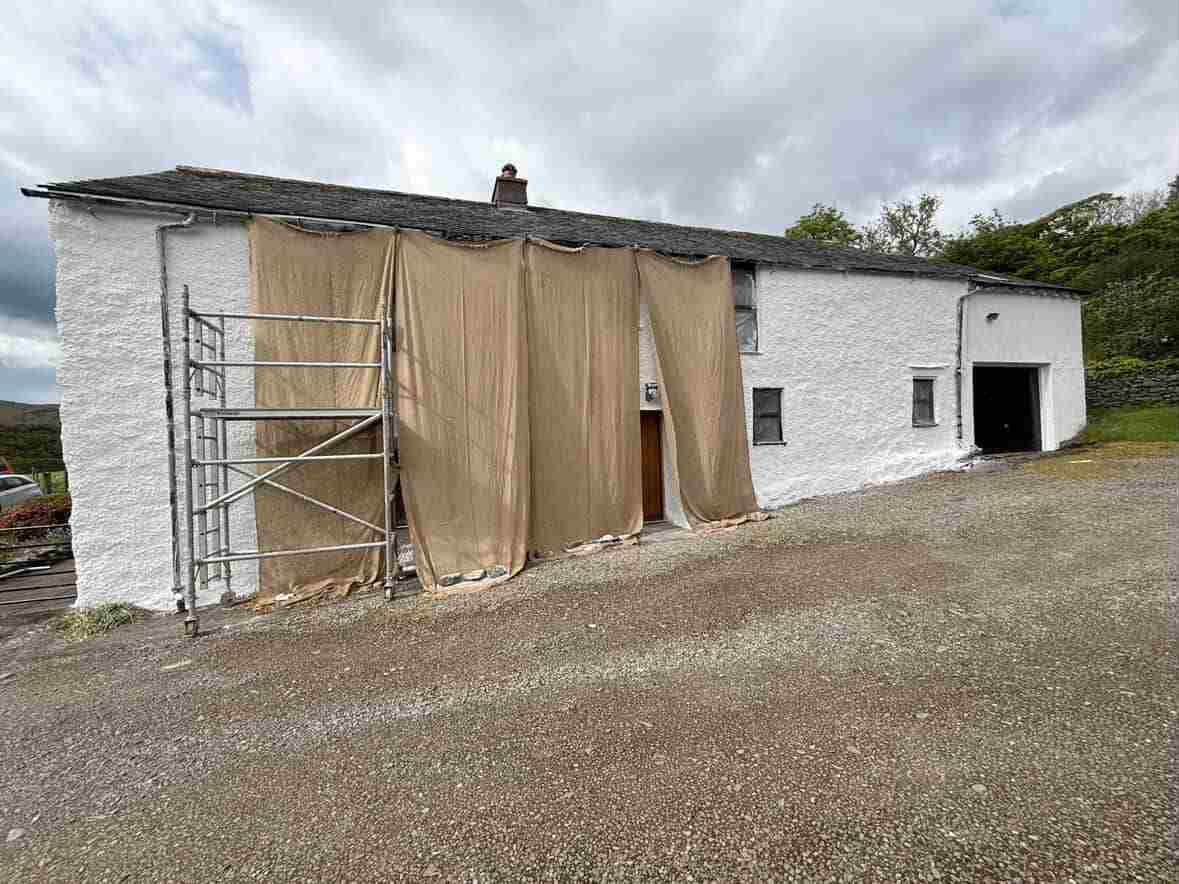
Once the work has been completed, protecting it becomes just as important as applying it correctly.
A tried-and-tested traditional method is to hang damp hessian or burlap sheeting over the fresh work.
The hessian should be lightly misted throughout the day to maintain a cool, humid environment around the lime.
Do not spray water directly onto fresh mortar, plaster or limewash, as this can damage the surface or wash away fine particles.
Protection should remain in place for at least 48–72 hours, and even longer if conditions remain hot or windy.
Wind Can Be Just as Damaging as Sunshine
It's easy to focus purely on temperature, but drying winds can be equally problematic.
A warm breeze rapidly removes moisture from fresh lime, even when the wall isn't in direct sunlight.
If you're working on exposed elevations, consider creating temporary wind protection alongside your hessian coverings.
Keep an Eye on the Weather Forecast
Good lime work starts before the first bucket is mixed.
Take a few minutes to check:
- Maximum daytime temperatures
- Overnight temperatures
- Wind strength
- Humidity
- Rain forecast
If temperatures are above 25°C for several consecutive days, delaying the project by a few days could make all the difference.
Remember, repairing failed lime work takes far longer than waiting for better conditions.
Summer Limewash Tips
Limewash needs even more care than mortar or plaster.
Never apply limewash to hot walls or surfaces that have been baking in direct sunshine.
The background should be cool and slightly damp before application, allowing the limewash to carbonate gradually rather than drying immediately on contact.
Thin multiple coats will always outperform one heavy coat.
Plan Ahead and Don't Rush
One of the biggest advantages of working with traditional lime is that it rewards patience.
Successful lime projects aren't about speed—they're about creating the right conditions for the material to do what it has done for centuries.
Taking a little extra time to plan around the weather will give you a finish that lasts for decades.
Need Advice?
Whether you're tackling a listed building, repairing old stonework, applying lime plaster or simply wondering if today's weather is suitable, we're always happy to help.
Our team has years of experience supplying lime products and advising customers on everything from product selection to application techniques.
If you're unsure, just give us a call before you start - we'd much rather help you get it right first time.
And if you're using the Cornerstone SuperTherm System, don't forget to download Ian's new application guide, packed with practical advice to help you achieve the very best results.
Lime has been protecting buildings for hundreds of years. With a little patience and a close eye on the weather, it'll continue doing so for many more.