

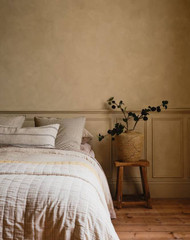
Limewash Paint Trend Here To Stay: Effortlessly achieved with Keim Colourwash
Posted by Sarah, Celtic Sustainables on 5th Feb 2026
If you've seen limewash interior design trends online and in glossy magazines and want to give it a try, this article is for you! If you’ve done some research but feel overwhelmed by the many different limewash finishes, effects, and traditional paint finishes, some of which aren’t suitable for your walls, you’re not alone. It's not as simple as diluting some lime and applying it to your walls, but once you understand the process, it becomes much easier. We’re here to help you find the finish you're aiming for.
What is a limewash effect?
A limewash effect is this really lovely, decorative finish you can put on walls. It’s matte, textured, and sometimes even a bit chalky, giving your walls a soft, mottled look that’s full of character. It mimics the traditional style that old houses used to have that are crafted with lime putty and pigments. The cool thing is, this traditional style is breathable, which is great for your walls. But not all modern ‘limewash effects’ are eco-friendly or breathable. That’s why the Keim Colourwash stands out. It’s breathable and offers many benefits, making it a smart choice for both style and function.
Why is the limewash trend here to stay?
Limewash has become such a popular design trend, and it’s easy to see why! It blends natural, sustainable, and eco-friendly qualities with a timeless, perfectly matte look. It softens any room, adding a relaxed, natural vibe with a sense of depth. It’s an interior style that’s good for you, too! With eco-friendly credentials, ultra-low VOC levels, and non-flammability, Keim Colourwash is the top choice to achieve that gorgeous limewash effect in your home.
Limewash interior paint is easy to achieve with the Colourwash system by Keim
It's been a while since Keim launched their colourwash limewash effect range, and it's continued to grow in popularity. The trend remains strong and shows no signs of fading from the spotlight. And that's a good thing! We’ve been influenced by its increasing popularity (check social media for inspiration!). With this in mind, we wanted to revisit the topic and address any questions you might have about the system. As with all Keim products, the system is very comprehensive, accompanied by relevant data sheets and a helpful guide.
Celtic Sustainables proudly offers Keim Mineral, natural silicate paints. For the complete list of Keim Mineral Paints, click here.
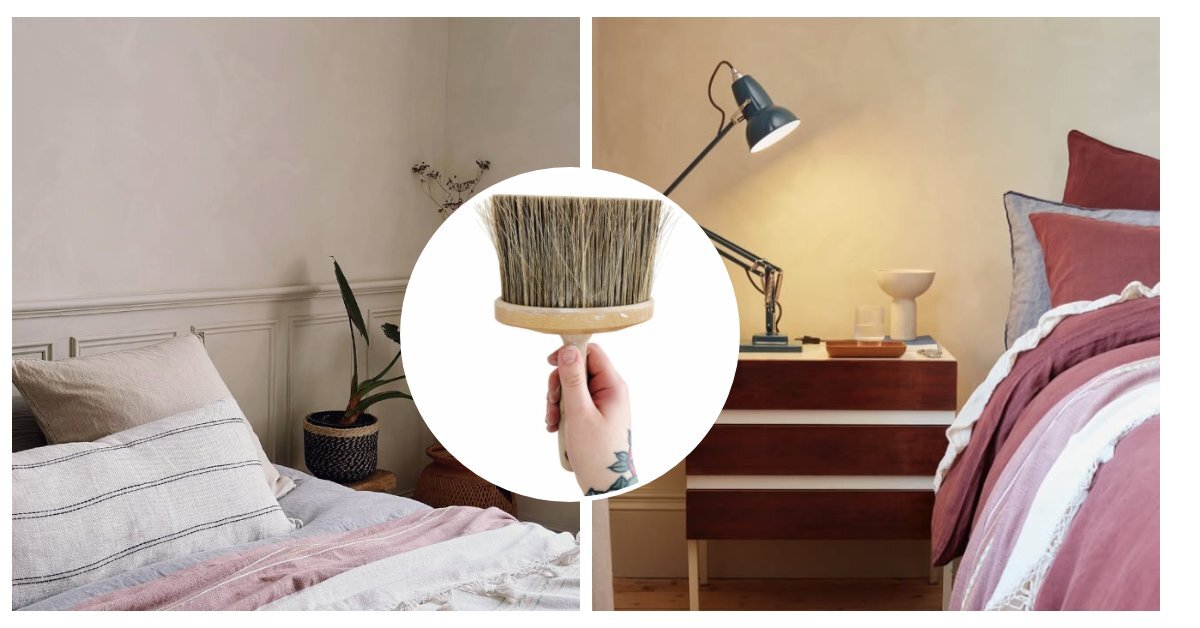
Limewash paint that's simple to apply and achieves the desired look
The Keim Colourwash range is an excellent choice to achieve a limewash effect because it can be applied to both bare and previously painted interior walls and ceilings. It doesn't need diluting, is non-caustic, UV stable, and features a flat matt finish. Eco-friendly and user-friendly, it is ideal for bathrooms and bedrooms, with ultra-low VOC levels. Additionally, the Keim Colourwash system is suitable for lime plaster due to its high breathability, but unlike traditional limewash, it can also be applied to gypsum (pink) plaster.
Traditional Limewash Vs modern limewash paint effect
Traditional limewash, which is a historic finish for exterior and interior walls and ceilings, limewash bonds directly to the building to protect it from the elements. Colourwash, on the other hand, is specifically for interior walls. It’s easy to achieve the perfect look in just one or two coats, is non-caustic, and forms a permanent bond to the surface.
- Traditional limewash paint forms a matt, breathable finish to protect porous stone walls.
Limewash is the traditional paint used to finish lime work both internally and externally.
Like Limewash paint, Keim Colourwash is made from natural materials and is sustainable. However, tt uses a potassium silicate mineral binder and is designed as an eco-friendly, non-caustic, and breathable alternative to traditional limewash. Consider trying it to give your space a natural, environmentally friendly touch!
- Keim Colourwash is a simple system for creating the ‘limewash effect’ on modern plaster finishes (including "pink" plaster), achieving that aged, textured look.
Steps for using Keim limewash effect paint: check out our guide; How to create a limewash effect on interior walls
Places to avoid using limewash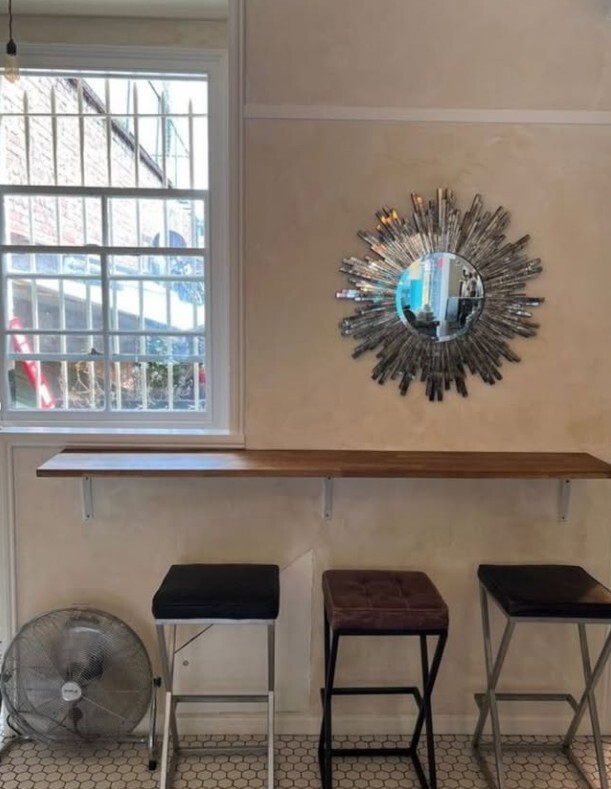
Keim colourwash paint is highly versatile and ideal for interior walls and ceilings, but not suitable for plastic, wood, or metal surfaces. It is washable and provides a traditional limewash-like appearance. More durable than standard limewash, it creates a washable surface that can be maintained with gentle, low-moisture cleaning. However, harsh cleaners or abrasive cloths should be avoided to protect the matte finish.
Supplies needed for limewash painting.
First, it’s important to clean the walls thoroughly to remove dust, dirt, or grease. Use an appropriate cleaner and ensure the surface is completely dry before moving on. Before applying the Colourwash, test it on a small area first to check the colour and consistency, making sure it matches your expectations. After completing these steps, clear the area, cover soft furnishings, and lay down plenty of drop cloths on the floor to protect against drips and splashes.
Painters' Prep, surface cleaner, and degreaser is perfect for preparing walls and surfaces prior to painting; it features a professional-strength 5-in-1 surface preparation formula. It is non-toxic, odour-free, does not cause skin burns, and contains no abrasives.
Tips for using Keim limewash interior paint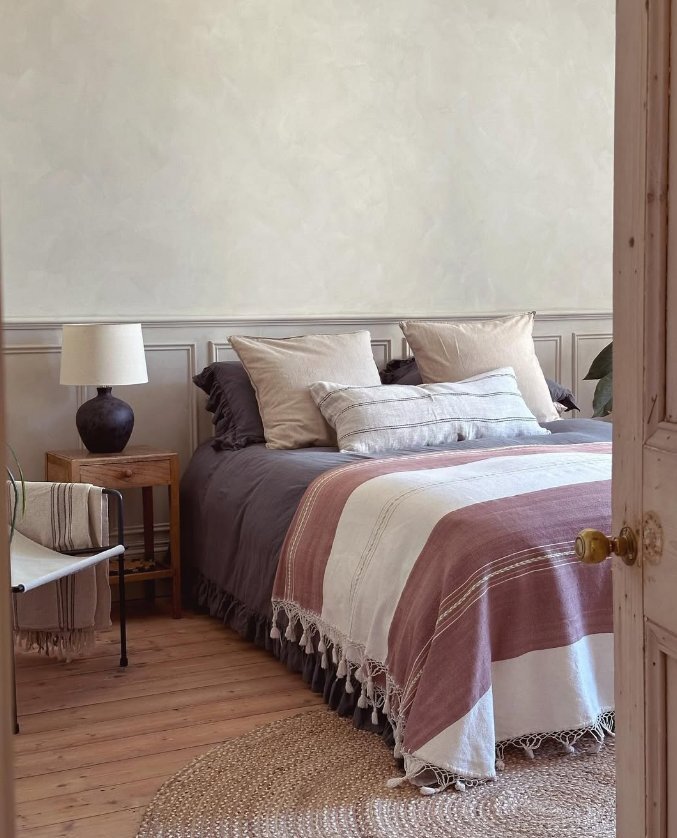
To achieve the desired colourwash effect, we strongly recommend using the Keim round bristle brush. It’s a worthwhile investment that, with proper care, can be used for other projects too. In my experience, I tested with a small standard Harris brush for a small area—it worked easily enough. However, for larger areas, investing in the right tool makes the job much easier and more effective. Remember, it’s an investment.
It's also a good idea to have these ready before you start your project:
- Painter's tape
- Mixing bucket or paint kettle
- Ladder or step stool
Then prepare the colourwash mixtures, ensuring you have the correct primers, and get started!
Application of colourwash Mixtures:
- Stir thoroughly before and during application.
- Allow 12 hours before overcoating with Keim Colourwash.
- Maintain a wet edge throughout the process.
- Use the Keim Oval brush with light pressure to create overlapping crosshatch strokes in ‘x', ‘w', and ‘m’ motions.
- Use a dry brush to soften any visible brush marks.
- Avoid touching up as the coating begins to dry.
- Wait a minimum of 12 hours between each coat.
Colourwash appears darker when applied and becomes lighter as it dries, so you might need to add an additional layer or apply a different colour layer to enhance contrast. It’s all about testing and reassessing with limewash.
Here’s another one of our fab articles discussing Keim Colour Wash Effects for interior Walls, check it out for more inspiration: How to create a limewash effect on interior walls
If you're interested in learning more about traditional lime wash, check out 'Painting with Limewash Paint.' Another helpful resource is the Keim Colourwash tech page, which also offers a digital colour swatch brochure.