


Cornerstone SuperTherm Insulating Plaster Review: Warmer, Healthier Internal Walls
Posted by Celtic Sustainables on 5th Feb 2026
We got our hands on some pre-production bags of Cornerstone SuperTherm insulating plaster and we had just the internal wall job to trial it on.
We love to try out new products as soon as they are available. At least one of the ten people in the Celtic team are working on their homes in some way at any one time. By using the products we sell and sharing information between us about how well they perform, we can authentically talk about them. The new Cornerstone SuperTherm insulating plaster was no exception. It is unusual for one of us to be plastering the internal walls of our homes, but our Director, Glyn, had a particularly tricky wall that he was seeking a solution for.
The problem: a cold and mouldy internal wall
The problem wall is the end bedroom wall on the north side of the circa 1930s built bungalow that doesn’t get a great deal of natural light. The block wall shows no signs of failure on the outside and has patchy cavity wall insulation. The guttering is sound.
The wall was always very cold and had black mould growing on it, especially behind the wardrobe where the air couldn't circulate.
Glyn didn’t want to go for an external wall insulation (EWI) solution and didn’t have space inside the room to put internal wall insulation (IWI) wood fibre boards without moving the door to the ensuite bathroom (which would in turn mean rearranging the bathroom to accommodate a repositioned door).
The space between the problem wall and the bathroom door frame on the perpendicular wall was just under 40mm. Which meant that insulating wood fibre boards, which have a minimum thickness of 40mm, were just too thick as they too would need to be plastered after fitting to give a paintable surface giving a total thickness of around 45-47mm.
The solution: Cornerstone SuperTherm insulating plaster
What is SuperTherm Insulating Plaster?
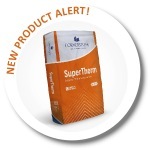 SuperTherm insulating plaster is a high-performance, lime-based internal plaster that combines traditional breathability with modern thermal insulation. Designed primarily for solid walls (although we would be using it here on a cavity wall), it uses an ultra-lightweight, foamed aggregate to significantly reduce heat loss while still allowing moisture to move freely through the building fabric.
Unlike conventional plasters, SuperTherm acts as both a plaster and an insulating layer, helping to improve wall U-values, reduce cold surfaces, and minimise condensation risk.
Its natural lime composition makes it particularly suitable for older and historic buildings, as well as eco-friendly retrofits, because lime is highly alkaline and naturally resistant to mould and fungal growth. By helping walls dry out rather than trapping moisture, SuperTherm supports healthier indoor air quality while reducing the conditions in which mould thrives.
Applied as part of a multi-coat system (it requires a finishing top-coat plaster), SuperTherm offers a practical way to make buildings warmer, more comfortable, and more energy-efficient without compromising their ability to breathe.
How well does SuperTherm Plaster Insulate?
The Lambda (λ) or K-value of SuperTherm Insulating Plaster is 0.04 W/mK making it comparable*, in terms of insulating properties, to our 40mm Warmshell Wood Fibre boards which have a K-value of 0.043/mK.
This means that a wall insulated with either SuperTherm or the thinnest (40mm) thick board of Warmshell should expect reduce the heat loss through the wall by approximately 65%. This will make the room feel much warmer and more comfortable and deliver substantial energy savings.
Of course, in this case we don’t have 40mm to play with, which is why Glyn was so keen to use the SuperTherm. Even if he could only get 30mm of Insulating Plaster on the wall, the room would be dramatically improved.
How to apply SuperTherm Insulating Plaster
Glyn wanted to inspect the structure of his wall before applying the insulating plaster, so he removed the existing plaster to reveal the blockwork underneath. This step may not be necessary for other applications – consult the official application guidance. However, this step also gave Glyn a few more millimetres of space to apply the plaster.
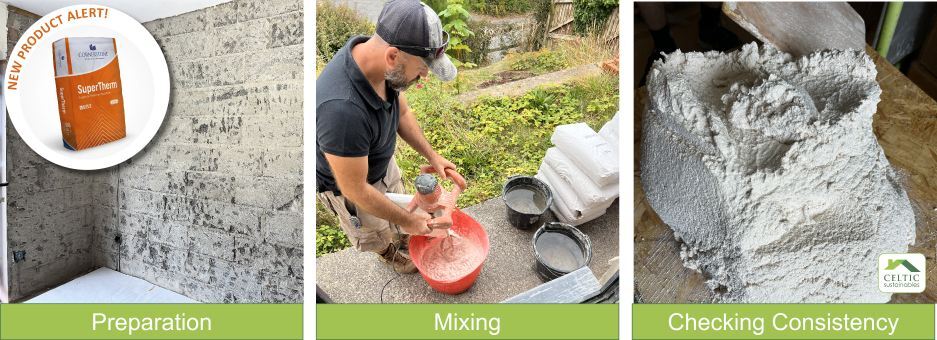
Having determined that the blockwork was sound, Glyn’s builder, Che, set about mixing and applying the SuperTherm. Che is an experienced builder who is keen to use environmentally friendly, sustainable, and natural products wherever possible. He has previously used other lime plasters and, of course, “pink” plasters.
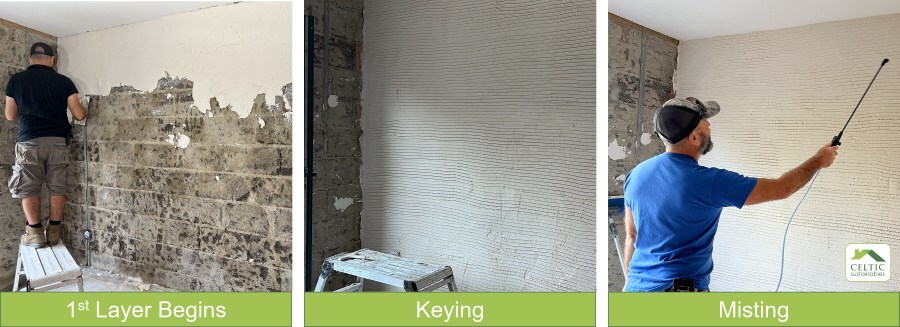
SuperTherm Insulating Plaster is engineered as a true insulating plaster, and the application of it is quite different to other wall plasters. For example, it is very lightweight and shouldn’t be pressed or worked into the wall, and the first thin base coat mustn’t be left to dry before the thicker second coat is applied. Like other lime plasters, though, the curing stage is very important and SuperTherm benefits from being “misted” with water during the first 7-10 days to prevent rapid drying.
Che was sure to read and re-read the application instructions before he began applying the insulating plaster. He worked in batches of one or two bags at a time, mixed it with a plasterers whisk and put it onto the wall with a float.
"The dry bags are so very light and when mixed with water it has a consistency more like a light and fluffy cake mix than plaster! To keep the baking analogy, when the plaster dries and cures on the wall, it begins to feel more like a perfectly cooked Victoria sponge."
We were all keen to see how well the insulating plaster held to the wall and whether it would slump or crack. After all, its use on Glyn’s wall was the first application of it outside of the Cornerstone team.
Glyn said, "The SuperTherm held its form perfectly. Che followed the instructions to the letter, and I misted the wall regularly during the days the plaster was curing. When we looked closely, there was a small fine line crack in the very first section that Che had applied, but that first batch was applied when Che was learning about the consistency and application. So, the first parts were always going to be about trial and error. It will be totally covered by the mesh and top-coat and is so tiny it won’t be an issue".
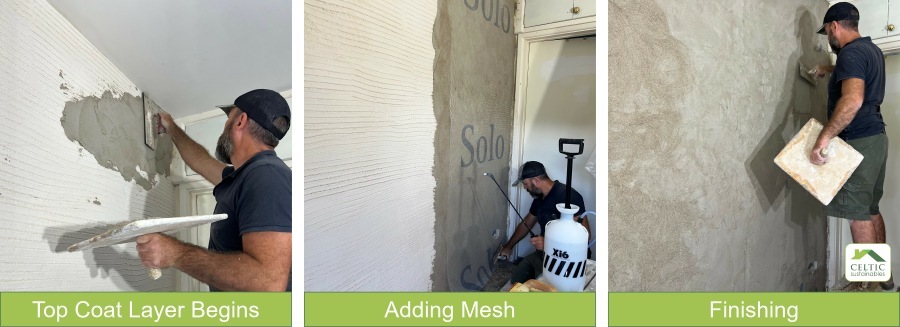
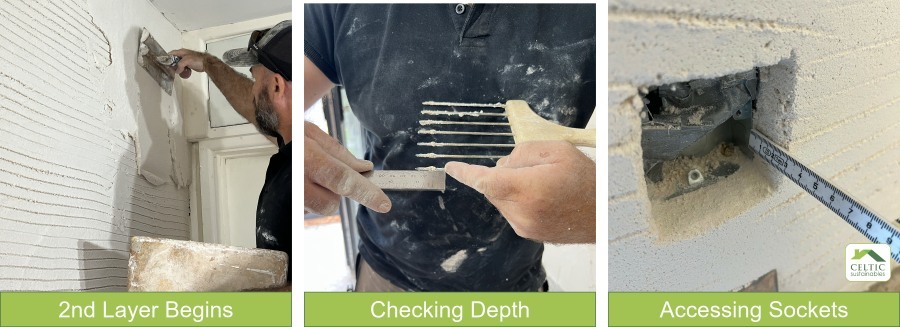
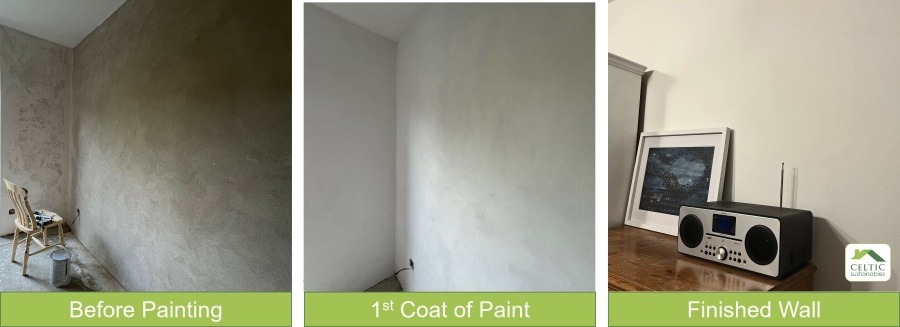
When cured, the insulation plaster is still quite soft, more like insulating foam boards than plaster. Therefore, Cornerstone says to avoid point loading and to always mesh within the topcoat layer (using a Cornerstone finishing plaster). Glyn decided to use Cornerstone Promix Fine for the topcoat along with the Lime Green Solo Render Mesh. It was then finished with two coats of white Beeck Maxil Pro internal mineral paint.
Is the wall warmer with the insulating plaster?
The wall definitely feels warmer. Tested by placing one hand on the insulated section and the other on the adjoining wall that stretches into the ensuite bathroom. The difference is significantly noticeable.
The wall was completed at the end of September 2025. At the time of writing, January 2026, the wall has remained mould free and sound.
Thermal Heat Map - Before and after Supertherm Insulating Plaster
Update: 10-Feburary-2026. We were able to borrow a thermal imaging camera to really see the difference the SuperTherm insulating plaster has made. We were blown away by the difference that we could see on the heat map. By our approximation the wall with the SuperTherm Insulating plaster is about 5 degrees Celcius warmer than the pink plaster wall.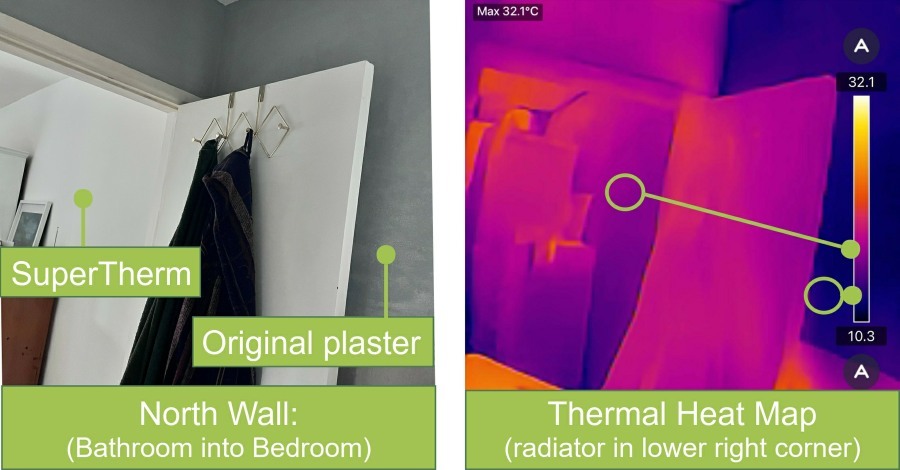
Further information about SuperTherm Insulating Plaster
If you’re struggling with cold, damp, or mould-prone walls, Cornerstone SuperTherm insulating plaster offers a simple, effective, and eco-friendly solution. Whether you’re renovating an older home or upgrading for energy efficiency, it delivers warmth, breathability, and long-lasting results. Contact us today to learn more or get your hands on this innovative plaster and feel the difference for yourself.
For more information about other work Che has done in the area see this coastal renovation project and Che Lewis build work: chelewisconstruction.com
* The lower the mK number the better so, SuperTherm has a slightly better insulating value. In practice though, this means that how well the insulation is installed (making sure it’s continuous, well-fitted, and free from gaps) usually has a much bigger impact on energy savings than the small difference, in this case, between the m/K values of the products.