
Tips for Storing Eco-Friendly Paint
Posted by Sarah, Celtic Sustainables on 14th Jan 2026
Advice and guidance for storing paint
It's always helpful to keep some paint stored so you can touch up those pesky scuffs and marks, which often occur in high-traffic areas of the house, such as hallways and kitchens. But even with good intentions to store paint correctly, sometimes we’re just so glad to see the back of all the DIY and the mess that is created when either renovating and painting that we often just chuck the tins and tubs to the back of the garage with every intention to go back and clean them up and label appropriately – but, do we ever get around to doing it?
Let’s discuss the importance of storing paint properly. Unlike conventional paints, the paint we supply here at Celtic Sustainables doesn’t contain harsh chemicals and preservatives. As a result, careful storage is essential to maintain their quality and performance, ensuring the paint remains usable and in excellent condition for months after opening..
Step one: When you begin painting, pour the paint into a paint kettle or tray. To prevent contamination, avoid dipping your paintbrush directly into the paint tin.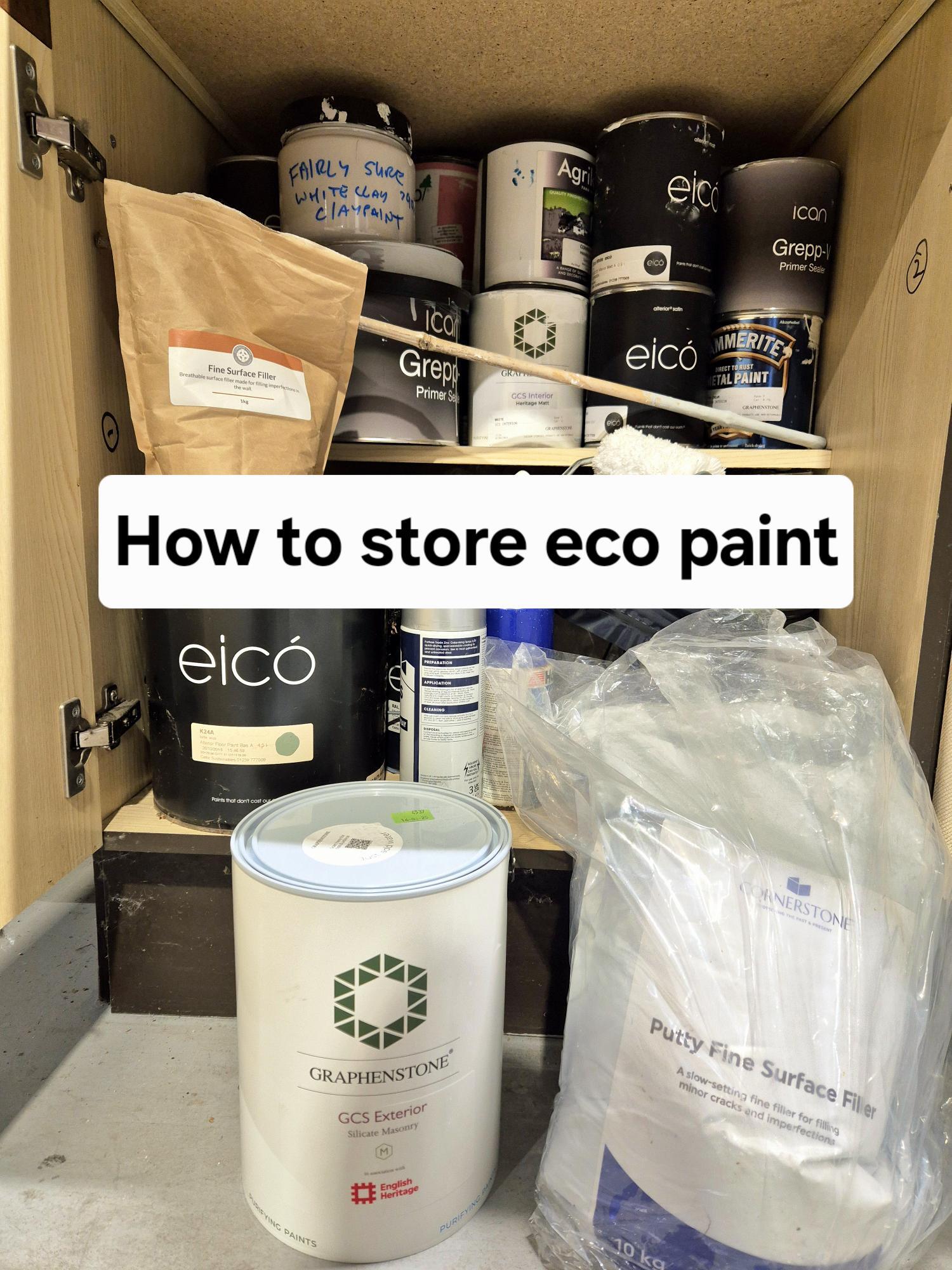
Step two: If you've used half the paint in the tub, it will likely contain a lot of air. Over time, this air can affect the paint, leading to separation and creating a thick, dry layer on the surface.
If you need to store the paint for an extended period, I recommend decanting it into a smaller glass or plastic jar to keep it airtight. The less air in the tin, the better!
A quick solution is to cover the paint in the tub with something like cling film. This prevents air from coming into contact with it. While using cling film may not be the best eco-friendly option, it's a necessary step if you don't have a smaller container available.
Once paint has been opened, its shelf life is generally about six months, especially for products like Graphenstone that require dilution. To extend its usability, it’s best to decant the paint into a smaller container to minimise the amount of air in the container. Additionally, remember to only dilute the amount you need!
And then finally, label the tin and store it in a cool, frost-free, and dry environment in a tightly closed container.
If you are storing paint in its orginal tin
If you are storing paint in its original tin, it is advisable to clean the rim of the container to remove any paint residue, as this can affect the airtight seal. Ensure the lid is firmly tapped on, preferably using a rubber mallet, to secure it properly. Store the paint in a cool, dry place, away from direct sunlight and frost, to maintain its quality. A suitable storage location could be a cupboard or a similar space, such as under the stairs.
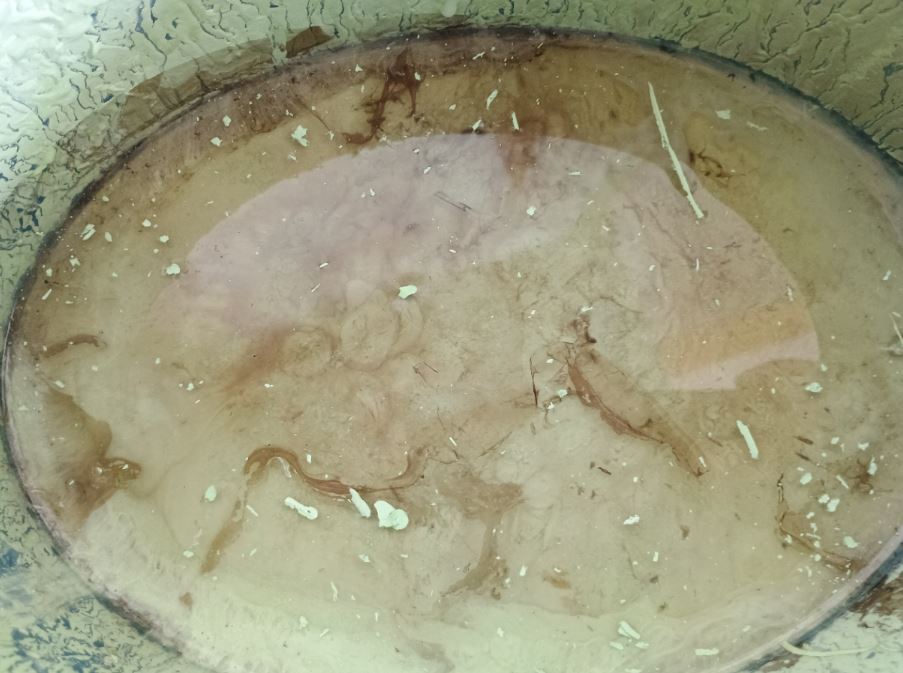
Here is an example of natural mineral paint that has been used and then stored incorrectly for about 6 months:
Using paint from a previously opened tin
Natural paints behave a little differently from conventional paints, and that’s part of their appeal. Because they are made without harsh chemicals or synthetic preservatives, they need a little more care, especially once opened.
If a tin has been open for several months, some separation is completely normal. In most cases, a slow but very thorough stir is all that’s needed to bring the paint back to a usable, even consistency.
Occasionally, you may notice brown streaks or discolouration in the clearer liquid on top (like in the image above where the paint has been stored badly). If the streaks can't be identified, this can indicate mould, which can happen with low- or no-preservative paints if spores are introduced via brushes, rollers or even the air. While this isn’t ideal, it’s a natural consequence of the incorrect storing of paints that are designed to be kinder to both your home and the environment.
If mould is present, disposal may be the safest option. However, some customers choose to carefully remove the affected liquid from the surface using a spatula, taking care not to disturb the paint beneath. Once removed, stir thoroughly, check the texture, perhaps add a little clean water back in, and test the paint on a scrap piece of paper or card. If it applies and dries normally, it may be perfectly usable. Though, as with all natural products, this can’t be guaranteed.
When it comes to disposal, many natural paint ranges, such as Auro, are made with raw minerals and can even be added to home compost, allowing you to return unused paint safely back to the earth rather than sending it to landfill.
We have discussed previously what to do with leftover paint. Here are some ideas for you:
https://www.celticsustainables.co.uk/blog/what-to-do-with-leftover-paint/