

House without bills: Tackling the energy cost crisis
Posted by Sarah, Celtic Sustainables on 19th Mar 2026
Inspired by Guy Martin's TV programme: House Without Bills
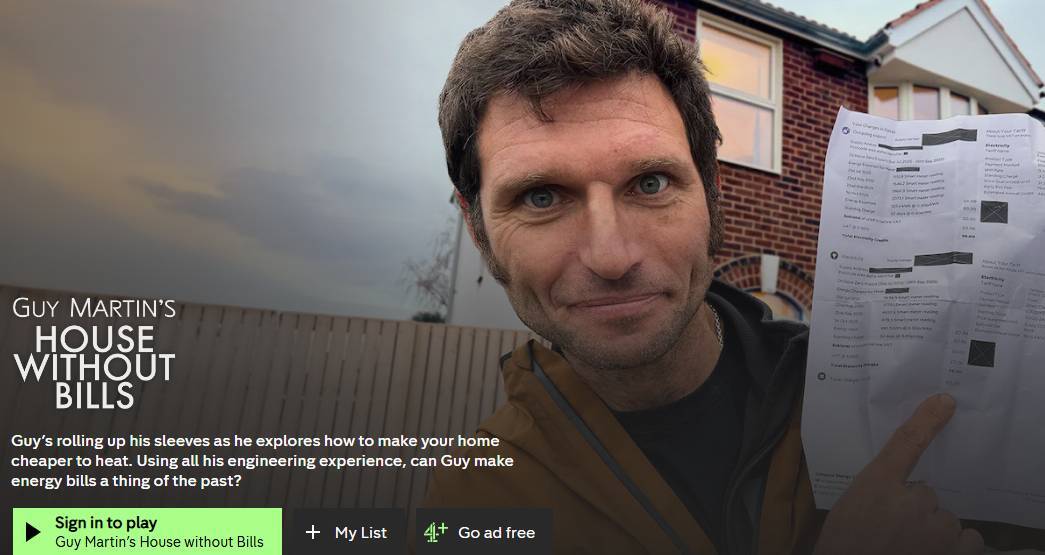
Fig. 1. Guy Martin explores how to make your home cheaper to heat. Guy Martin's House Without Bills (2026) was produced by North One Television, part of the All3Media Group. The 90-minute Channel 4 special was co-funded by the innovation foundation Nesta as part of their Greener Homes initiative. First shown: Mon 9 Feb 2026 Screenshot by Channel 4.
Making energy bills a thing of the past!
Did you recently watch the Channel 4 program “House Without Bills” in February? It featured Guy Martin exploring ways to make homes cheaper to heat, with the aim of creating bill-free houses in the future. If you missed it, you can catch up by streaming the 90 minute program on the Channel 4 app.
Guy Martin is renowned for performance and efficiency with previous careers as a motorcycle racer and vehicle mechanic. At first glance, he might be a surprising lead in the aim to reduce home energy bills, but he happily admits that he spends days with his thermal imaging camera checking his home for draughts and energy leaks!
UK domestic energy bills have risen by 75% over the past five years, primarily due to increasing demand following the COVID-19 pandemic and successive crises, which have driven bills to record highs. It is important to highlight these issues and their impact on homeowners, and that is precisely what the program intends to do by providing useful information we can all understand and apply.
What did they cover in the show?
The program documents a nine-month eco-transformation and renovation of a 1930’s, cavity wall, semi-detached house in Stretford. Guy also visited various initiatives nationwide, including energy-efficient homes and universities innovating new solutions.
The program demonstrates how to enhance our homes affordably. It's worth watching – even just to learn how an air source heat pump functions!
Interestingly, they also replastered the entire inside of the property with lime plaster as a breathable alternative to regular “pink” plaster to create a better indoor environment. If only they had known about our thermal lime plasters!
I’m not an expert on creating a zero-bill home, so I won't delve deeply into that. However, a key factor repeatedly emphasised is the importance of topping up the insulation. Properly insulating walls, floors, and roofs significantly helps maintain a comfortable temperature—keeping your home warm in winter and cool in summer. Enhancing your insulation is a small change with a big impact, making your living space more comfortable and potentially saving money over time.
It was fascinating to see that they also did a thermal heat loss survey, similar to the one we spoke about here: Heat loss in a house - Information is Power! on both Guy's home and the completed renovation in Stretford.
Typical 1930s Semi-detached house and energy efficiency
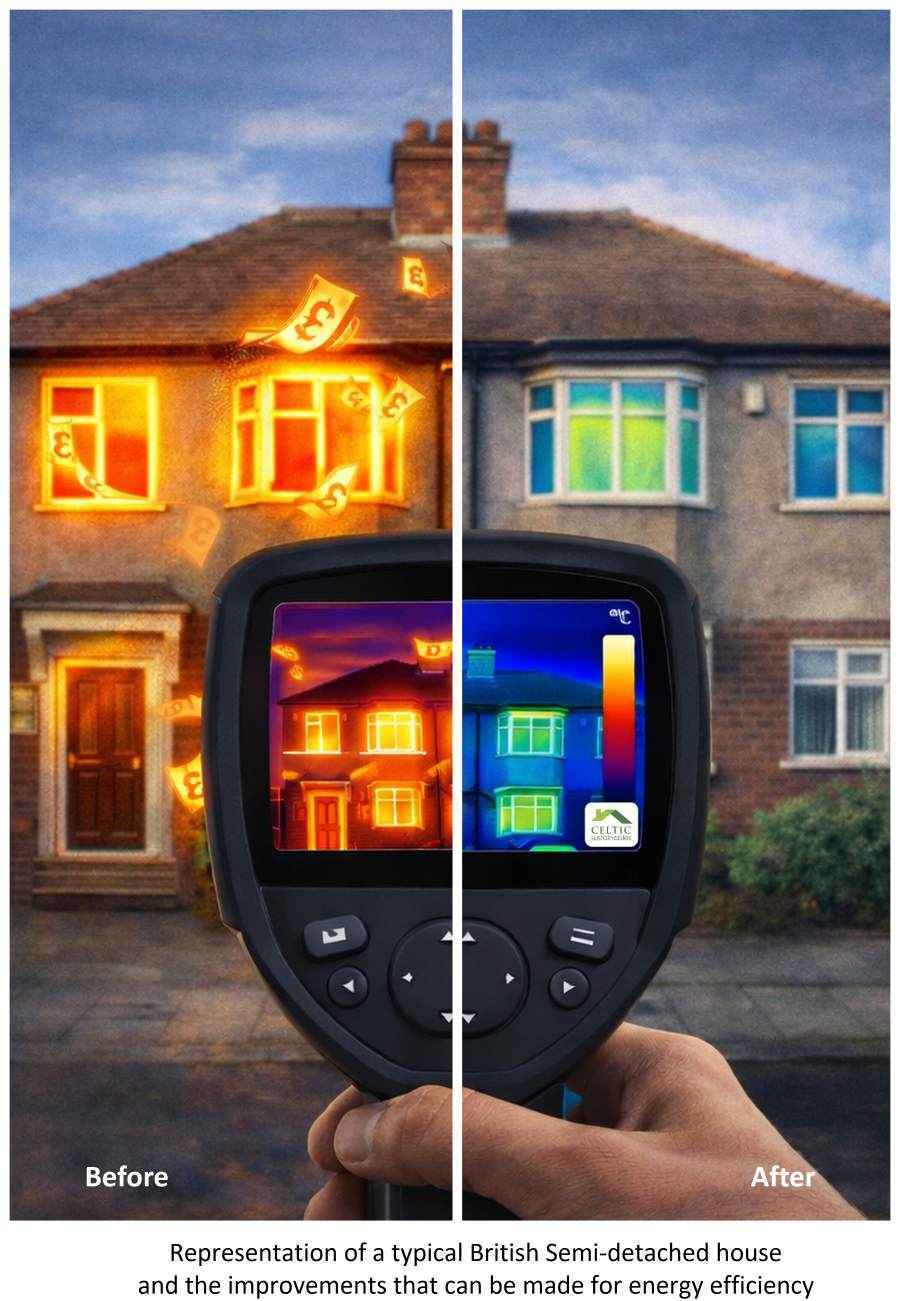
Why is topping up your loft insulation so important?
Adding loft insulation up to the recommended 270mm (240mm for Cosywool) can help UK households save between £20 and over £350 annually on energy bills, depending on the existing insulation and house size, according to the Energy Saving Trust.
Loft Insulation - keeping you toasty whilst saving you money.
What Guy Martin Says about Insulation
“Sort your insulation, sort your draught-proofing, make sure you keep an eye on ventilation, then you can think about upgrading windows and doors. PassivHaus standards are the ultimate, but you don’t have to go that far, just use them as guidance. We had amazing success with cheap methods like old fashioned draught excluders and heavy, thermal curtains, and the German thing of Stoßlüften – basically opening your windows for a bit* is a regular thing round our house now.”
* Stoßlüften is translated as “shock ventilation”. It’s a German practice of opening windows and doors wide open for 5 to 10 minutes (shortened in winter) on dry days to quickly exchange indoor air without losing the heat stored in walls and furniture. Ideally, you create a cross-breeze from opposite sides of the house (be careful that doors don’t slam shut). The aim is to reduce the moisture in the house and therefore improve air quality inside the house.
We've chatted about energy-saving tips before. Check out some of our other useful articles!
- Heat loss in a house - Information is Power!
- How can we help you during Energy Saving Week 2026?
- Stay warm, spend less.
- How to Reduce Your Carbon Footprint at Home
- EcoFan: the Ideal gift for the Environmentalist in your Life
- A Straw Bale House Built with Clever Technologies
- Get Cosy without Costing the Earth this Season
David MacKay Retrofit House, Cambridgeshire
Does all this information sound kind of familiar? If yes, then you may have heard about David Mackay’s retrofit house in cambridgeshire and his book written in 2008 “Sustainable Energy - Without the Hot Air” - available for free https://www.withouthotair.com/ . Nothing better than recycling an idea for the next generation we say!
MacKay used his own home as a real-world example in the book. The house was a fairly typical mid-20th-century semi-detached house in Cambridge, and like many UK homes it originally used quite a lot of gas for heating. By analysing his energy bills over many years, he found his household was using about 40 kWh per day for heating and hot water.
Rather than a dramatic rebuild, MacKay focused on a set of simple, practical improvements that many existing homes could adopt. These included improving insulation (such as loft and cavity wall insulation), reducing draughts by improving doors and glazing, and making better use of heating controls. He also paid closer attention to how the heating system was actually operated day-to-day.
The result was striking: his household heating demand fell to around 13 kWh per day. MacKay used this example to show two important things. First, basic efficiency measures can dramatically cut energy use in ordinary homes. Second, even after those improvements, a typical older UK house still consumes far more energy than ultra-low-energy standards such as modern passive buildings.
In other words, long before programmes like Guy Martin’s House Without Bills explored how to slash household energy demand, MacKay was already using his own home as a practical experiment to demonstrate the same principle: measure your energy use, improve the building fabric, and smarter heating can make a huge difference.
Further Information:
Natural Fibre insulation is excellent! It offers a sustainable solution for your home or campervan. At Celtic Sustainables, we provide a variety of options and a dedicated team ready to offer advice and guide you to the best product. Contact us today! https://www.celticsustainables.co.uk/natural-fibre-insulation/
For all other energy bill advice:
- Energy Savings Trust is a trusted source of upgrade info that has payback/savings info too: https://energysavingtrust.org.uk/top-energy-saving-ideas.../
- Citizens Advice has some thoughts as well, a bit more slanted towards how you live rather than what you fit: https://www.citizensadvice.org.uk/.../make-sure-your.../
- For more information about the show and the PassivHaus standard, visit: https://www.passivhaustrust.org.uk/news/detail/?nId=1507
- David MacKay’s book “Sustainable Energy - Without the Hot Air” - available for free https://www.withouthotair.com/ Check out chapters 7 and 21 in particular for information about his Cambridgeshire house.